

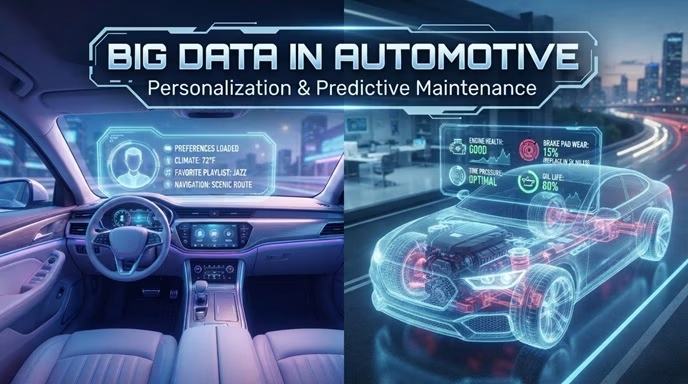
The Role of Big Data in Automotive: Personalization and Predictive Maintenance
Posted at Mon, Dec 14, 2026 12:00 PM
In today’s world, data is king. The automotive industry, in particular, is harnessing the power of big data to revolutionize the way cars are built, maintained, and experienced by drivers. From personalized in-car experiences to predictive maintenance that helps drivers avoid costly repairs, big data is changing the game for both consumers and manufacturers alike.
At Beach Automotive Group, we’re always excited to explore how new technologies are shaping the future of the automotive world. In this blog, we’ll dive into how big data is playing an increasingly important role in personalizing driving experiences and improving vehicle maintenance with predictive insights.
What is Big Data in the Automotive Industry?
Big data refers to the enormous volumes of information that can be gathered and analyzed to reveal patterns, trends, and associations, especially in relation to human behavior and interactions. In the automotive world, big data is generated through multiple sources, including:
- Connected vehicle technologies (GPS, sensors, onboard diagnostics)
- Telematics (vehicle-to-vehicle and vehicle-to-infrastructure communication)
- Infotainment systems (driver preferences, location data, entertainment choices)
- Autonomous vehicles (sensor data, machine learning models)
- Vehicle performance metrics (engine performance, fuel efficiency, tire pressure, etc.)
With this data, manufacturers and service providers can analyze and predict everything from the way drivers interact with their vehicles to how often specific parts might need maintenance. The true potential lies in using this data to improve both the driver experience and vehicle longevity.
Big Data and Personalization: Tailoring the Driving Experience
One of the most exciting aspects of big data in the automotive industry is its ability to create personalized driving experiences. Modern vehicles, particularly those with advanced infotainment systems, are capable of tracking driver behavior and preferences to tailor the driving experience in real-time.
Customizing Infotainment Features
As vehicles become more connected, your car can learn your preferences when it comes to things like music, navigation routes, climate control, and seat positioning. The more data your car collects about your driving habits, the better it can adjust these settings automatically without you needing to make changes every time you start the car. For example, your vehicle may automatically set the temperature and play your favorite playlist when you get in, based on your past preferences.
Driver Behavior and Safety Features
Big data also plays a critical role in improving driver safety. By analyzing driving patterns, your vehicle can assess your behavior (like braking habits or acceleration patterns) and offer suggestions for improving efficiency or driving style. Additionally, this data is helping automakers refine driver-assist systems, such as adaptive cruise control, lane-keeping assist, and collision avoidance systems, which can adapt to the driver’s habits to provide better support in everyday driving.
Predictive Maintenance: Keeping Your Vehicle in Top Condition
One of the most significant applications of big data in the automotive world is predictive maintenance—the process of using data-driven insights to predict and prevent vehicle breakdowns. With connected vehicles, it’s possible to monitor real-time metrics and detect potential issues before they become serious problems.
Continuous Monitoring and Diagnostics
Modern vehicles are equipped with a variety of sensors and diagnostic tools that constantly monitor the health of different systems in your vehicle—engine, transmission, brakes, tires, and more. These sensors collect data on everything from fluid levels and temperature to tire pressure and battery voltage. If any system begins to show signs of wear or malfunction, the data can alert the driver or the dealership of the issue before it causes a breakdown.
Anticipating Future Repairs
Using big data, manufacturers and service providers can analyze vast amounts of historical data to identify trends and predict when certain vehicle components are likely to need attention. For example, if your vehicle’s sensor data shows an abnormal pattern in how the brakes are functioning, predictive algorithms can forecast when your brake pads might need to be replaced, even before the driver notices any issues. This allows you to proactively schedule repairs, minimizing the chances of a breakdown or expensive repair costs down the road.
Real-Time Alerts and Service Reminders
With the rise of connected car technologies, manufacturers can send real-time alerts to drivers about their vehicle’s condition. These notifications might include reminders for routine maintenance (like oil changes or tire rotations), or they may indicate a specific issue that requires attention. This helps drivers stay on top of vehicle care and avoid small problems from becoming larger, more costly repairs.
How Big Data Improves Vehicle Design
Automakers aren’t just using big data to improve the driving experience and maintenance processes—they’re also using it to design better vehicles. By analyzing data from millions of vehicles, manufacturers can learn which features are most important to consumers, how different components perform under various conditions, and where improvements can be made.
For example, big data can help engineers understand how safety features like airbags and crash sensors perform in real-world conditions. It can also reveal how fuel efficiency and vehicle handling can be improved across different driving environments. The result is a more reliable, efficient, and comfortable vehicle.
The Future of Big Data in Automotive
Looking ahead, the role of big data in the automotive industry will only grow. As vehicles become even more connected and equipped with advanced technologies, the volume and variety of data being generated will increase. This opens up even more opportunities to enhance personalization, optimize vehicle performance, and ensure preventive maintenance.
In the near future, we may see even greater integration between vehicles and other technologies, such as smart cities and autonomous driving systems, further amplifying the role of big data in shaping the driving experience.
How Beach Automotive Group is Embracing Big Data
At Beach Automotive Group, we’re committed to staying ahead of the curve when it comes to adopting the latest technologies in the automotive industry. Our team works hard to ensure that your vehicle is always up-to-date with the latest software, systems, and service options designed to keep your car performing at its best.
If you have questions about how big data might impact your vehicle or if you’re ready to experience the benefits of predictive maintenance, our team is here to help. Contact us today to learn more about how Beach Automotive Group can keep you ahead of the curve in the world of automotive technology.
Beach Automotive Group
Driving Innovation, Keeping You Safe, and Enhancing Your Driving Experience
Ready to experience the benefits of connected technology? Visit Beach Automotive Group for a test drive and see firsthand how big data is shaping the future of the automotive world.