

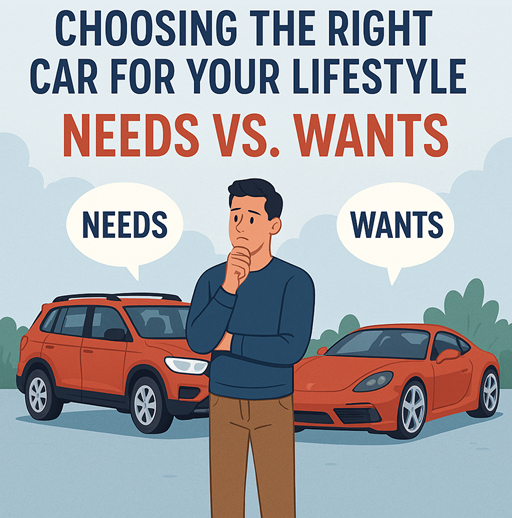
Choosing the Right Car for Your Lifestyle: Needs vs. Wants
Posted at Mon, Apr 20, 2026 11:00 AM
Shopping for a new car can be exciting—but also overwhelming. With so many options on the market, how do you know which vehicle is truly the right fit? The key is finding the balance between what you need and what you want. While it's easy to fall for flashy features and sleek designs, choosing a car that aligns with your lifestyle will save you money, reduce stress, and ensure long-term satisfaction.
Here’s how to separate your must-haves from your nice-to-haves and make a smart, lifestyle-aligned choice.
1. Start With Your Needs
Your needs are the non-negotiables—the things your car absolutely must deliver to fit your everyday life. Consider these questions:
- How many passengers do you need to accommodate?
Families might prioritize a minivan or SUV, while singles or couples may be just fine with a sedan or compact. - What type of driving do you do most?
City dwellers might prefer something small and fuel-efficient, while rural drivers may need AWD and off-road capability. - Do you need cargo space?
If you haul sports gear, work tools, or groceries for a big family, trunk or hatchback space is critical. - What’s your budget?
Factor in the total cost of ownership, including insurance, fuel, maintenance, and depreciation—not just the sticker price. - What safety features are essential?
Think automatic emergency braking, blind spot monitoring, and child seat anchors—especially if you have young passengers.
2. Define Your Wants
Wants are the features that would enhance your driving experience but aren’t essential. These could include:
- Heated or ventilated seats
- A premium sound system
- Panoramic sunroof
- Leather upholstery
- Built-in navigation
- Wireless charging
- Remote start
These features can make your time behind the wheel more enjoyable—but they may not be worth the extra cost if they push you out of your budget or sacrifice practical necessities.
3. Match Your Car to Your Lifestyle
Here are a few common lifestyles and what types of cars often align with them:
- Busy Families: Look for SUVs or minivans with plenty of passenger room, storage compartments, rear-seat entertainment, and high safety ratings.
- Urban Commuters: Compact cars or hybrids offer easy parking, great fuel economy, and lower emissions.
- Adventurers and Weekend Warriors: Crossovers or trucks with AWD/4WD, roof racks, and towing capacity may be the way to go.
- Eco-Conscious Drivers: Electric vehicles (EVs) and hybrids can offer sustainability with long-term fuel savings.
- Luxury Seekers: If comfort and cutting-edge tech are high priorities and the budget allows, a well-equipped sedan or luxury SUV might be a better match.
4. Test Drive With Purpose
Don’t just test drive for comfort—test for fit. Bring along car seats if you have young kids, check visibility, see how easy it is to park, and explore the infotainment system. Imagine your daily routine in that vehicle.
5. Future-Proof Your Purchase
Think long-term. Will your car still meet your needs in two, five, or ten years? Buying with future life changes in mind can save you the cost and hassle of upgrading sooner than expected.
Final Thoughts
Choosing the right car isn't about finding the flashiest model—it's about choosing a vehicle that supports your lifestyle, priorities, and goals. By clearly identifying your needs and weighing them against your wants, you’ll be more confident at the dealership and happier long after the purchase.