

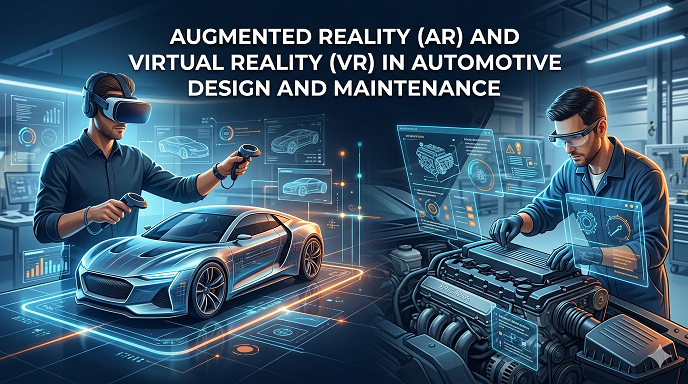
Augmented Reality (AR) and Virtual Reality (VR) in Automotive Design and Maintenance
Posted at Mon, Apr 6, 2026 11:00 AM
By Beach Automotive Group
The automotive industry is embracing cutting-edge technology in every aspect of vehicle development and maintenance, and two of the most revolutionary technologies making waves are Augmented Reality (AR) and Virtual Reality (VR). These technologies are no longer confined to entertainment and gaming—they are now transforming the way vehicles are designed, maintained, and repaired.
At Beach Automotive Group, we’re diving into how AR and VR are shaping the future of automotive design and maintenance, making processes safer, more efficient, and more interactive than ever before.
What Are Augmented Reality (AR) and Virtual Reality (VR)?
Before exploring their applications in the automotive industry, let’s define AR and VR:
Augmented Reality (AR):
AR overlays digital content onto the real world. With the help of devices like smart glasses or smartphones, AR enhances a person’s view of the physical world by adding virtual elements. In automotive applications, AR can be used to display important information over the car’s real-time surroundings, like navigation directions, vehicle diagnostics, or repair instructions.
Virtual Reality (VR):
VR, on the other hand, immerses users in a fully simulated environment. By wearing VR headsets, users can interact with a completely digital world. In the automotive industry, VR is used for training, design, and virtual testing of vehicle features.
Both AR and VR are changing the way we interact with vehicles, whether we’re designing new models, conducting maintenance, or training technicians.
How AR and VR Are Used in Automotive Design
The vehicle design process has traditionally been a hands-on and highly iterative process, but AR and VR are changing that landscape by allowing designers to virtually prototype, visualize, and refine their ideas in a digital environment.
1. Virtual Prototyping and 3D Modeling
One of the most significant ways VR is being used in automotive design is through virtual prototyping. Designers can create and view 3D models of a vehicle without ever having to build a physical prototype. This allows for rapid iterations, reducing costs and time spent on physical models.
Using VR headsets or computer screens, designers can virtually “walk” around and even inside a vehicle to assess its aesthetics, ergonomics, and functionality. These virtual models can be manipulated in real-time, making it easier to tweak designs before committing to production.
2. Collaborative Design in Virtual Environments
Design teams, regardless of their physical location, can collaborate in virtual spaces. Through VR platforms, multiple people can meet in a shared virtual environment to discuss design elements, review 3D models, and provide feedback. This level of collaboration speeds up the decision-making process and ensures that teams are aligned.
3. AR for Interactive Design Presentations
AR allows designers to present their concepts in a more interactive and engaging way. Instead of presenting static images or blueprints, designers can use AR to overlay virtual components onto a real-world environment. This can help stakeholders visualize how a new design will fit into a car’s existing layout or how it will look in real life.
AR and VR in Automotive Maintenance and Repair
While AR and VR are game-changers in the design process, they are also revolutionizing how vehicles are serviced and repaired, improving efficiency, accuracy, and safety.
1. AR for On-the-Go Repair Assistance
Imagine a mechanic working on a vehicle and, instead of relying on paper manuals or relying on trial and error, having access to AR-powered repair guides in real-time. AR can superimpose step-by-step instructions directly onto the technician's view of the engine or other parts of the vehicle. By wearing AR glasses or using a tablet, the mechanic can see precise instructions, diagrams, and even videos, guiding them through the repair process.
This technology also makes it easier to identify parts and components, ensuring that repairs are done accurately and efficiently.
2. Remote Assistance and Troubleshooting
AR also allows for remote assistance, enabling technicians to collaborate with experts or manufacturers in real time. If a technician encounters a complex issue, they can use AR to stream their view of the vehicle to a remote specialist. The specialist can then overlay annotations, guiding the technician through the troubleshooting or repair process.
This is especially helpful for repairs that may require specialized knowledge or experience, reducing downtime and ensuring that repairs are done correctly the first time.
3. VR Training for Technicians
Training automotive technicians is a critical aspect of maintaining a high-quality service. VR provides an immersive environment where technicians can practice their skills on virtual vehicles before ever touching an actual car. VR training simulations can replicate real-world repair scenarios, allowing technicians to get hands-on experience with minimal risk.
For example, a technician can learn how to perform complex procedures like brake repairs, engine diagnostics, or airbag installations without the pressure of working on a live vehicle. This allows for more effective, practical training and helps technicians build confidence and skills.
How AR and VR Are Improving Safety
Safety is paramount when it comes to vehicle design and maintenance. AR and VR technologies are helping to ensure safer working conditions for both designers and technicians.
1. VR for Crash Simulations and Testing
Before a vehicle is even produced, manufacturers can use VR to simulate crash scenarios. This allows engineers to test how the car's safety features (such as airbags, seatbelts, and crumple zones) will perform in various accidents. These virtual crash tests can help identify potential weaknesses, improving the vehicle’s overall safety.
2. AR for Hazard Detection in the Shop
AR can be used to improve safety in repair shops by alerting technicians to potential hazards. For example, if a technician is working on a car’s undercarriage and is unaware of a hot engine part, AR can alert them in real-time, preventing burns or injuries. AR can also highlight areas that require special handling, such as electrical systems or hazardous materials.
The Future of AR and VR in the Automotive Industry
As AR and VR technologies continue to evolve, their applications in automotive design and maintenance are expected to expand further. We’re likely to see:
- More immersive design environments, where teams from all over the world can collaborate and interact with virtual vehicle prototypes in real-time.
- Greater use of AR in consumer-facing applications, where drivers can use augmented reality on their dashboards to access navigation, vehicle health information, and real-time alerts while driving.
- Advanced VR training programs that simulate more complex repair scenarios, helping technicians gain experience in a variety of situations without the risk of damaging a real vehicle.
- More sophisticated predictive maintenance systems that leverage both AR and VR to identify potential issues before they arise, minimizing downtime and improving vehicle longevity.
Transformation
The integration of Augmented Reality (AR) and Virtual Reality (VR) in the automotive industry is transforming the way vehicles are designed, maintained, and repaired. These technologies offer significant benefits, including enhanced design capabilities, streamlined repair processes, improved safety, and more effective training for automotive technicians.
At Beach Automotive Group, we’re committed to staying at the forefront of these technological advancements to bring you the most innovative solutions for vehicle design, service, and maintenance. As AR and VR continue to evolve, we look forward to seeing how they will further revolutionize the way we interact with vehicles, making driving safer and more enjoyable for everyone.
Beach Automotive Group
Your Trusted Automotive Partner in Myrtle Beach
Ready to explore the latest in automotive innovation? Visit Beach Automotive Group today and experience the cutting-edge technologies that are shaping the future of the automotive industry.