

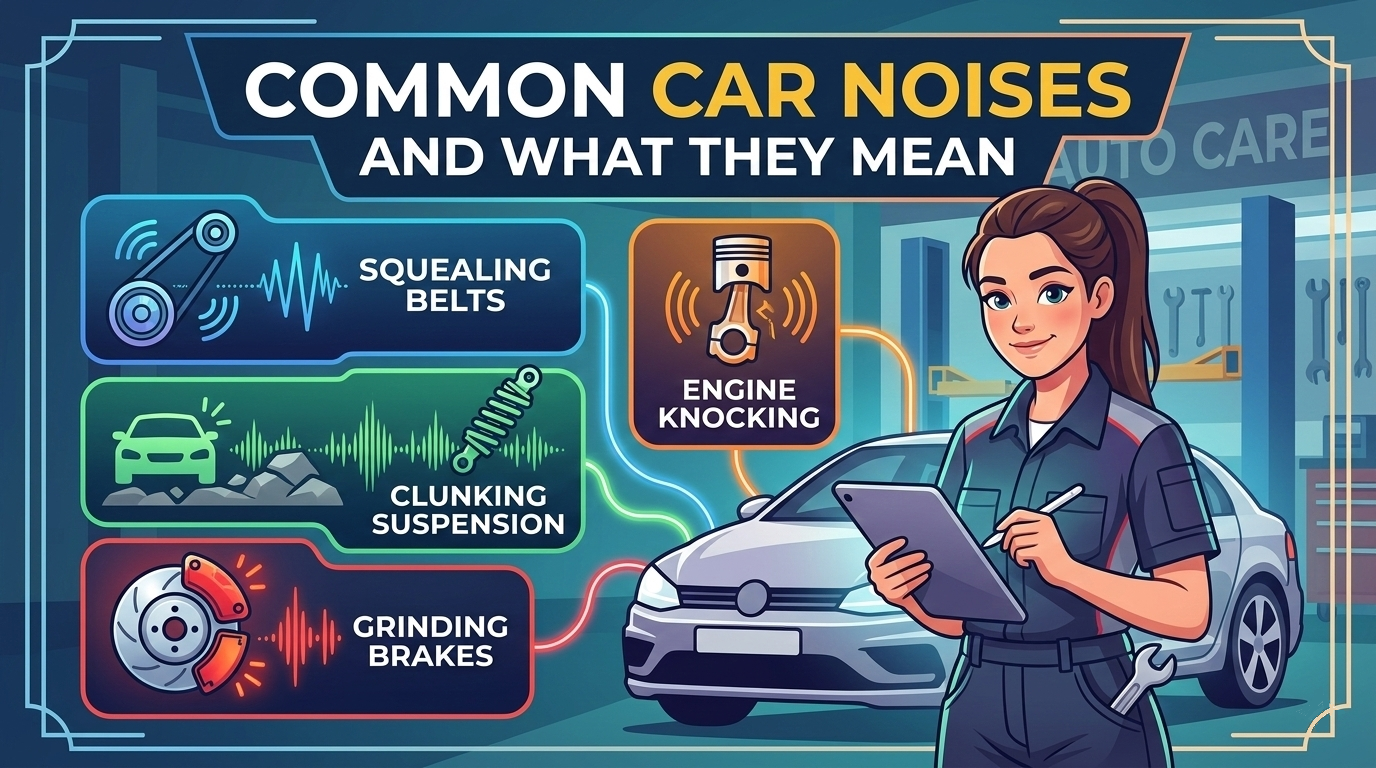
Common Car Noises and What They Mean
Posted at Mon, Mar 16, 2026 11:00 AM
By Beach Automotive Group
Every car makes a noise now and then, but not all sounds are created equal. While some noises might just be a minor issue, others could signal something more serious under the hood. At Beach Automotive Group, we want to help you understand what’s going on when your car makes an unexpected sound, so you can address any potential issues before they turn into costly repairs.
Here’s a breakdown of some common car noises and what they might mean:
Squealing or Squeaking When You Brake
What It Means: Worn Brake Pads
If you hear a high-pitched squeal when applying the brakes, it’s likely a sign that your brake pads are worn down. Many brake pads are designed with a wear indicator that creates a squealing sound to alert you when it’s time to replace them. Ignoring this noise can lead to more significant damage to your brake system, like worn-out rotors.
Beach Tip: If you notice this sound, it’s best to have your brake pads inspected and replaced before further damage occurs.
Grinding or Scraping Noise
What It Means: Metal-on-Metal Contact in Brakes
A grinding noise when you apply the brakes is more serious than a squeal. It usually indicates that the brake pads have worn down so much that the metal parts of the brake system are grinding against each other. This can cause significant damage to your rotors and other components.
Pro Tip: If you hear this noise, avoid driving and schedule an appointment with us right away. We’ll inspect your brake system and prevent further damage.
Clunking or Thumping Noise When Turning
What It Means: Issues with Suspension or Steering
A clunking noise when turning could indicate a problem with your vehicle’s suspension system, such as worn-out shock absorbers, ball joints, or struts. If you also feel excessive vibration in the steering wheel, it could point to a more serious issue with your steering components.
Beach Tip: If you hear this noise, it’s important to get your suspension system checked before it affects handling or leads to further damage.
Hissing or Sizzling Sound
What It Means: Leaking Fluid (Coolant or Oil)
A hissing or sizzling sound after turning off your engine could mean that hot coolant or oil is leaking onto the engine or exhaust components. This could indicate a leak in your cooling system or a problem with your engine seals.
Pro Tip: If you notice this sound, pull over and check for any fluid leaks under the car. If you find any, get your vehicle to the shop immediately for a full inspection.
Whining or Howling Noise
What It Means: Power Steering Issues or Alternator Problems
A whining or howling noise that increases as you accelerate can point to a few possible issues:
- Power steering fluid could be low, or the power steering pump could be failing.
- If the noise is coming from the front of the engine, it could be a problem with the alternator or the serpentine belt.
Beach Tip: If the noise is related to power steering, it can affect your ability to steer the car safely, so it’s important to have it checked out right away.
6. Rattling or Clicking Noise from the Engine
What It Means: Loose or Worn Engine Components
A rattling or clicking sound from the engine could signal a loose or worn-out timing belt, valves, or other engine components. These parts should be addressed quickly because failure can lead to more severe engine damage.
Pro Tip: If you hear this noise while the car is running, it’s a good idea to schedule an inspection as soon as possible to avoid a more expensive repair.
Popping or Backfiring Noises
What It Means: Fuel or Exhaust System Issues
If you hear a popping or backfiring noise, it could indicate an issue with your fuel injectors, exhaust system, or ignition system. Backfiring can also result from unburned fuel igniting in the exhaust system. This is something that should be checked immediately, as it can indicate poor engine performance and even damage.
Beach Tip: If your car is backfiring, it's best to have it inspected to diagnose the root cause and restore smooth performance.
Vibrating or Rattling Noise While Driving
What It Means: Tire or Wheel Issues
If you hear a vibrating or rattling noise while driving, especially when speeding up, it could indicate an issue with your tires, wheels, or brake components. A loose wheel or a bent rim can cause vibrations, and damaged tires or unbalanced wheels can also contribute to unusual noises.
Pro Tip: Have your tires and wheels inspected regularly to ensure they’re balanced and in good condition, especially before a long road trip.
Bubbling or Gurgling Sound from the Dashboard
What It Means: Coolant Circulation Issues
A gurgling or bubbling noise from the dashboard or under the hood could indicate an issue with your coolant system, such as low coolant levels or a problem with the radiator or thermostat. This can lead to engine overheating if not addressed quickly.
Beach Tip: If you hear this sound and your temperature gauge is rising, turn off the engine immediately and get your car to a professional mechanic.
Trust Beach Automotive Group to Address Your Car Noises
At Beach Automotive Group, we’re here to help you diagnose and fix any strange car noises. Our expert technicians can inspect your vehicle, provide accurate diagnoses, and perform necessary repairs to keep your car running smoothly and safely. Don’t ignore those noises—let us take care of them before they become bigger problems.
Schedule Your Appointment Today
If you’ve noticed any of the above noises or have concerns about your vehicle, schedule an appointment with Beach Automotive Group today. We offer expert service for Ford, Lincoln, Mazda, and Volvo vehicles and provide top-notch maintenance and repairs.
Beach Automotive Group
Where Your Car’s Health Comes First