

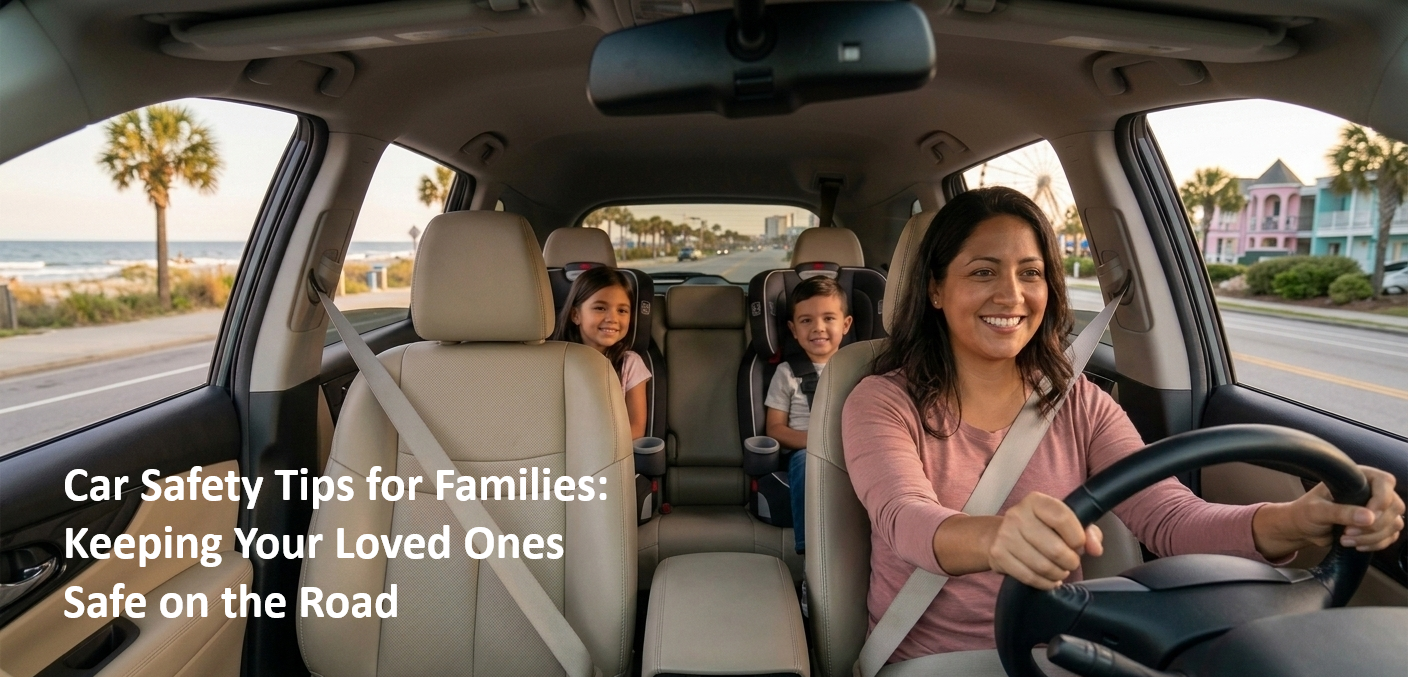
Car Safety Tips for Families: Keeping Your Loved Ones Safe on the Road
Posted at Mon, Mar 9, 2026 11:00 AM
When it comes to family travel—whether it’s a quick school drop-off or a long weekend getaway—safety should always come first. As a parent or guardian, the responsibility of protecting your loved ones on the road begins before you even turn the ignition. Fortunately, with a few key habits and precautions, you can greatly reduce risks and ensure peace of mind every time you drive.
Here are essential car safety tips for families:
Buckle Up—Every Ride, Every Time
It may sound obvious, but seat belts save lives. Make it a strict rule: everyone in the vehicle must wear a seat belt, regardless of age or distance traveled. Children should always be in age- and size-appropriate car seats or booster seats, properly installed and secured.
Quick tip: Check your child’s car seat expiration date and ensure it hasn’t been recalled or damaged.
Install Car Seats Correctly
Car seat safety is one of the most important factors in protecting young passengers. According to the NHTSA, nearly half of all car seats are installed incorrectly. Double-check the manual and consider having your installation inspected by a certified technician in your area.
Pro tip: Use the LATCH system or seat belt—whichever gives a more secure fit. Never use both at the same time unless your car seat manufacturer specifically allows it.
Keep Kids in the Back Seat
Children under 13 years old should always ride in the back seat. It’s the safest place in the vehicle in the event of a crash, especially with airbags that can seriously injure young passengers.
Secure Loose Items
In a sudden stop or collision, even small objects can become dangerous projectiles. Store toys, groceries, electronics, and other loose items in compartments or the trunk whenever possible.
Lead by Example
Kids learn from watching. Model safe driving behavior by buckling up, avoiding distractions, obeying traffic laws, and staying calm behind the wheel. Your actions teach your children lifelong habits.
Avoid Distractions
Phones, food, and even conversations with passengers can take your focus off the road. For family trips, consider setting up entertainment or snacks in advance so you can keep both hands on the wheel and your eyes forward.
Perform Regular Vehicle Maintenance
A well-maintained vehicle is a safer vehicle. Stay up to date on oil changes, tire rotations, brake inspections, and fluid checks. Don’t ignore warning lights—address issues promptly to prevent breakdowns or safety hazards.
Stay Weather-Aware
Before heading out, check the weather and road conditions—especially during winter, rainy seasons, or extreme heat. Pack an emergency kit with essentials like a flashlight, water, first-aid supplies, jumper cables, and blankets.
Use Child Safety Locks
Child safety locks on doors and windows are there for a reason—use them! They help prevent accidental openings and keep curious little hands from tampering with potentially dangerous controls.
Teach Road Safety Early
Talk to your kids about road safety—how to behave in a vehicle, how to cross streets safely, and why distractions can be dangerous. Empowering your children with knowledge adds another layer of protection.
Final Thoughts
Family car safety isn’t about being overcautious—it’s about being prepared. With a little extra attention and consistent safety practices, you can help ensure that every journey is a safe one for the people who matter most.
Stay safe out there—and remember, safety starts before you even leave the driveway.