

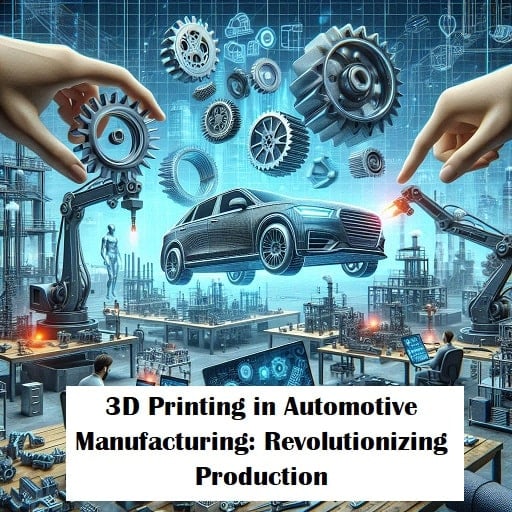
3D Printing in Automotive Manufacturing: Revolutionizing Production
Posted at Mon, Jan 5, 2026 7:00 AM
By Beach Automotive Group
The automotive industry has always been at the forefront of technological innovation, and one of the most exciting advancements today is 3D printing. From prototyping to full-scale production, 3D printing is changing the way vehicles are designed, tested, and manufactured. At Beach Automotive Group, we’re exploring how this groundbreaking technology is reshaping automotive manufacturing and the future of car production.
What is 3D Printing?
3D printing, also known as additive manufacturing, involves creating objects layer by layer from a digital file. Unlike traditional manufacturing methods that rely on cutting, drilling, or molding material into shape, 3D printing builds objects by adding material, one layer at a time. This allows for highly precise, customizable, and efficient production.
In the automotive industry, 3D printing is being used in everything from prototyping parts to manufacturing functional components. The technology allows automakers to create complex shapes and structures that would be difficult or impossible to produce using conventional methods.
The Role of 3D Printing in Automotive Manufacturing
Rapid Prototyping and Design Iteration
One of the most significant advantages of 3D printing in automotive manufacturing is its ability to enable rapid prototyping. Traditional prototyping can take weeks or even months to produce, but with 3D printing, manufacturers can create prototypes in a matter of hours or days. This allows automakers to quickly test designs, make adjustments, and iterate on ideas without the long delays and costs of traditional methods.
For example, car manufacturers can print prototype parts such as dashboards, engine components, and interior features to test for fit, function, and durability before committing to mass production. This quick turnaround allows manufacturers to refine designs and improve product quality, ensuring that the final vehicle meets the highest standards.
Customization of Parts and Components
Another area where 3D printing is making an impact is in the customization of parts and components. In the past, creating custom parts for a specific vehicle required expensive and time-consuming tooling and manufacturing processes. With 3D printing, however, manufacturers can easily produce small batches or even one-off parts tailored to a particular model or customer preference.
This opens up new possibilities for offering personalized features in vehicles. Whether it’s a unique interior design element or a specialized component for a performance vehicle, 3D printing makes it easier to cater to niche markets and individual customer needs without the high costs typically associated with customization.
Lightweight Parts for Improved Fuel Efficiency
In the pursuit of fuel efficiency and sustainability, automotive manufacturers are increasingly turning to lightweight materials for their vehicles. 3D printing allows manufacturers to create lightweight parts that maintain strength and functionality while reducing overall vehicle weight. By optimizing the design and material composition of parts, 3D printing can produce components that are both lighter and stronger than their traditionally manufactured counterparts.
For example, car makers can use 3D printing to produce parts such as engine brackets, intake manifolds, or suspension components that are optimized for weight reduction, which contributes to better fuel efficiency and improved performance.
On-Demand Spare Parts
Traditionally, automakers have had to stock large inventories of spare parts, leading to high storage costs and potential delays in obtaining hard-to-find parts. With 3D printing, manufacturers can produce on-demand spare parts as needed, dramatically reducing the need for large inventories and improving the availability of replacement parts.
For example, if a rare part is needed for an older vehicle model, 3D printing can be used to quickly create the part on-site without the need to wait for a manufacturer to produce it. This is particularly beneficial for classic cars or discontinued models, where spare parts may no longer be readily available.
Benefits of 3D Printing in Automotive Manufacturing
Cost Efficiency and Waste Reduction
Traditional manufacturing processes often involve cutting away large amounts of material from a solid block to create parts. This can lead to significant material waste. 3D printing, on the other hand, uses only the material needed for the final part, reducing waste and making the process more cost-effective. Additionally, because 3D printing eliminates the need for molds and tooling, it reduces upfront costs for manufacturers, especially when producing small batches or custom parts.
Faster Production Times
The ability to create parts quickly is one of the key benefits of 3D printing. With traditional manufacturing methods, it can take weeks or months to produce a part, especially if molds or special tooling are required. 3D printing eliminates the need for these steps, allowing manufacturers to produce parts in a matter of hours or days. This significantly speeds up the production process and enables faster time-to-market for new vehicle models.
Design Flexibility and Innovation
3D printing offers unparalleled design flexibility. With traditional manufacturing, parts are often limited by the constraints of the molds or tools used to create them. 3D printing, however, allows for the creation of complex geometries and intricate designs that would be difficult or impossible to achieve with traditional methods. This gives automotive designers the freedom to innovate and create new parts that improve performance, aesthetics, and functionality.
Sustainability and Eco-Friendly Production
As sustainability becomes an increasingly important focus in the automotive industry, 3D printing is helping manufacturers reduce their environmental impact. Not only does 3D printing reduce material waste, but it can also be used to produce parts made from recycled materials or biodegradable plastics. Additionally, the ability to create lightweight parts with 3D printing can lead to more fuel-efficient vehicles, contributing to a reduction in carbon emissions.
 3D Printing in the Future of Automotive Manufacturing
As 3D printing technology continues to evolve, its role in automotive manufacturing is expected to expand. We may see fully 3D printed vehicles in the future, with entire car bodies and chassis being produced through additive manufacturing. In fact, some companies are already experimenting with 3D printing entire cars, including the body, interior, and mechanical components.
The potential of 3D printing to revolutionize automotive manufacturing is vast, with improvements in efficiency, customization, and sustainability leading to a more streamlined and innovative production process.
At Beach Automotive Group, we’re excited about the role 3D printing will play in the future of the automotive industry. As we continue to embrace cutting-edge technology, we remain committed to bringing you the latest advancements in vehicle design and manufacturing.
Beach Automotive Group
Your Trusted Automotive Partner in Myrtle Beach